Martin Ince, the enchanting nerd that helped save ABSW
For contributions to thoughtful science journalism, to our profession and our Association, Ince won the Lifetime Achievement Award. By Aisling Irwin.
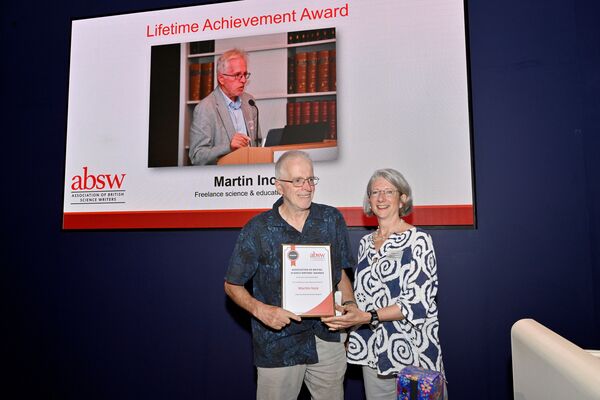
(Picture above) ABSW Board member Aisling Irwin (on the right) delivers the Lifetime Achievement Award to Martin Ince at the ABSW Awards Ceremony 2026 - Mark Lewis Photography
We don’t always hand out a lifetime achievement award. We award it when we feel there is someone we want to reward for their outstanding contributions in leadership or services to science journalism or science writing.
But this year we ARE awarding it – to Martin Ince.
I’ll start by observing that we all might not have been here tonight if it were not for Martin. Don’t get me wrong: sadly, I’m not saying that his science journalism saved us from the zombie apocalypse.
What I’m saying is that this vibrant association we have – and arguably the association in any form at all – only exists because a small group of people in the noughties rescued it from impending financial ruin, restocked it with cash and set it on its way. This is the first of several reasons we are giving Martin the award.
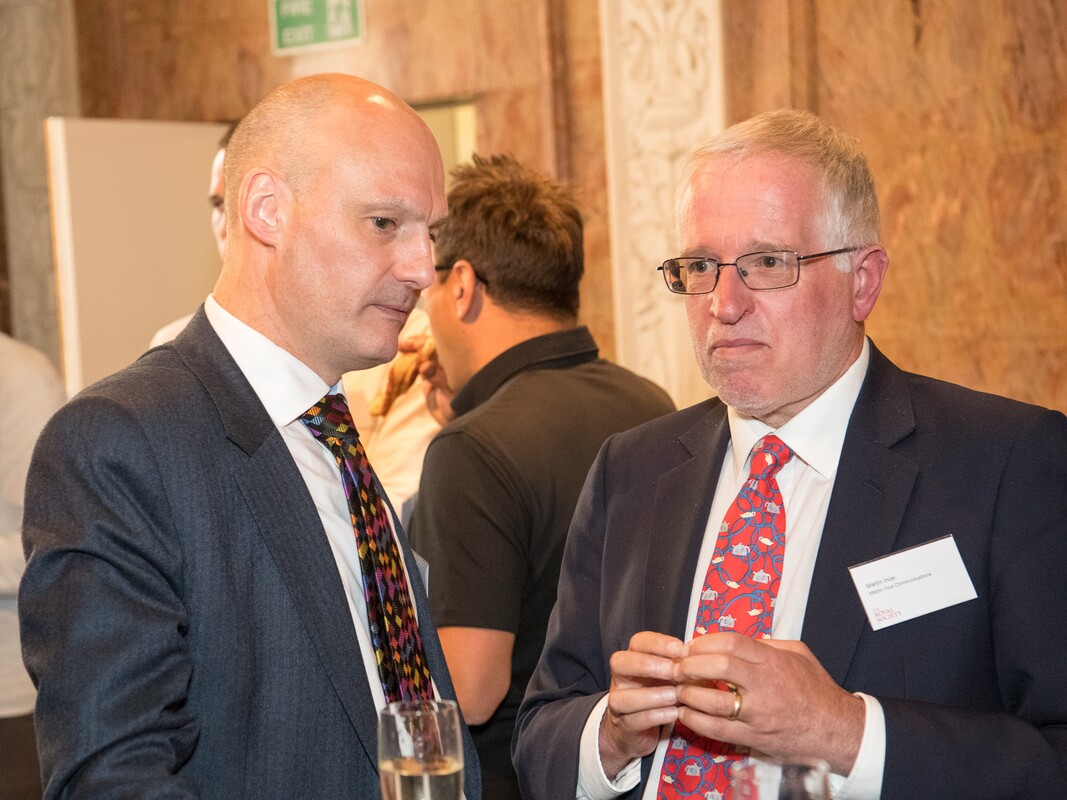
Martin Ince (on the right) with Bob Ward, ABSW Board Member, at the ABSW Awards Ceremony in 2018
Martin was treasurer back in 2007 when the lavish pharmaceutical sponsorship we had back then abruptly ended. This exposed, so I’m told, the unpleasant reality that ABSW had been living well beyond its means. Its chair at the time (Ted Nield) pronounced it terminally ill and gave it a year to live.
But, rather than going gentle into that good night, Ted and Martin did rage against the dying of the light. Fired by an imaginative suggestion by – I believe – Pallab Ghosh, they devised an audacious plan to take the Association from rags to riches.
They thought that if they could host the World Conference of Science Journalists they might be able to turn a profit and use that to set ABSW up for the future.
It was Martin, says Ted, who had to make that final decision to go for it.
(Although it was Ted who put his own house up as collateral.)
Martin became Finance Director for that World Conference, which did indeed make a lovely, liberating profit.
He then worked with the next chair, Natasha Loder, to reform ABSW financially. Natasha tells me it was a massive project. She says: “I did all the interesting stuff, but he battled with the details… Total unsung hero.”
And from that secure platform swiftly came new activities like the UK Conference of Science Journalists and the Summer School. Things that make us such an important part of the science writing landscape today.
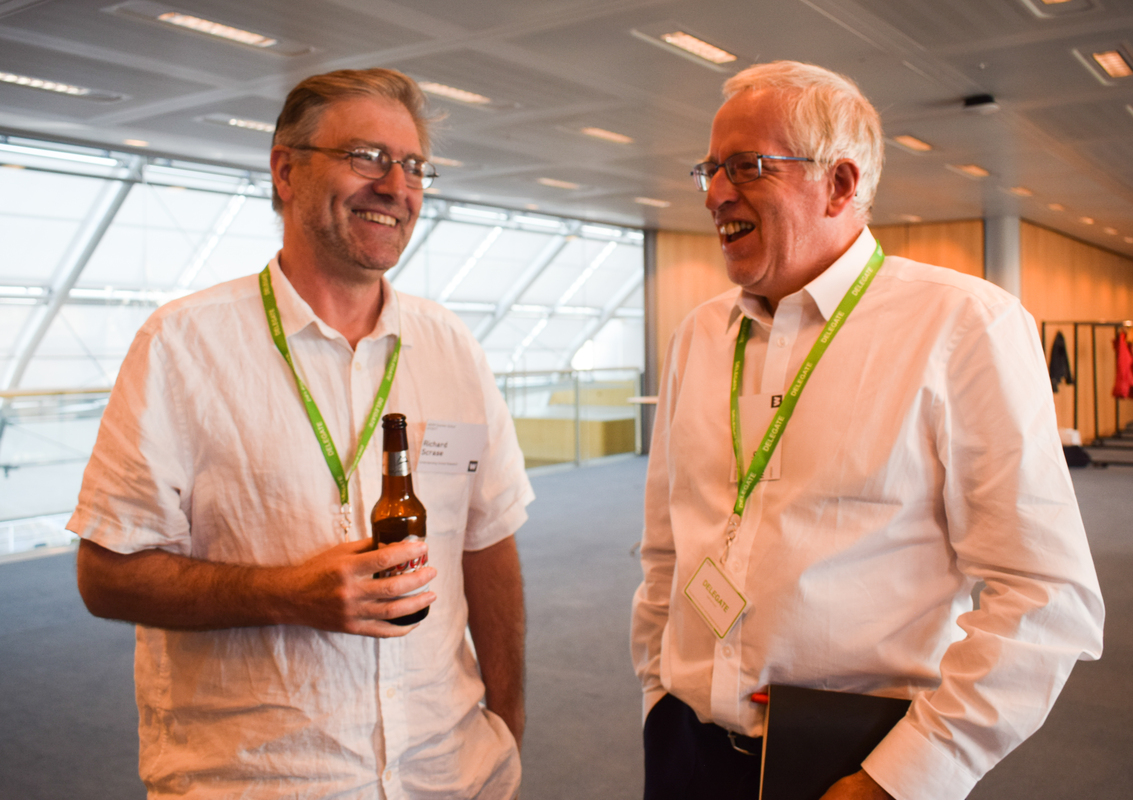
Martin Ince (on the right) with Richard Scrase, ABSW member, at the ABSW Science & Technology Journalism Summer School 2017 – N Khaleeq
To be honest, I have long believed that journalists are experts in finding fault in others but dismal at running anything themselves, especially looking after money. Well, Martin is an exception.
And he did more for ABSW several years later when, as chair, he steered us through the excruciating Tim Hunt affair. I’m not going to rehearse it now – but Martin has written about it: “Sometimes, we have to stick up for values such as the freedom to report. We must never compromise on this obligation.”
So Martin has done stacks for the ABSW... but there is so much more, and I’m going to highlight two other reasons why he is receiving this award.
From early in his career, he was interested in who controls technology and how it could be put to better use. He joined a group of thinkers who thought that technology should be human-sized, environmentally compatible, and egalitarian. He became involved with a magazine called Undercurrents, which was published for about a decade, I think. And which led to the book 'Radical Technology'.
And I think it was this that led him to start writing prolifically about the politics of science and technology. In a span of 6 years, he produced a spate of books including one about British nuclear policy, 'The Politics of British Science' [1986]; and, in 1990, 'The Rising Seas' – ahead of its time in the genre of the science and politics of climate change. And that expertise in science and technology policy informed his time as features editor on The Engineer and his 13 years on Times Higher Education, where he rose to Deputy Editor.
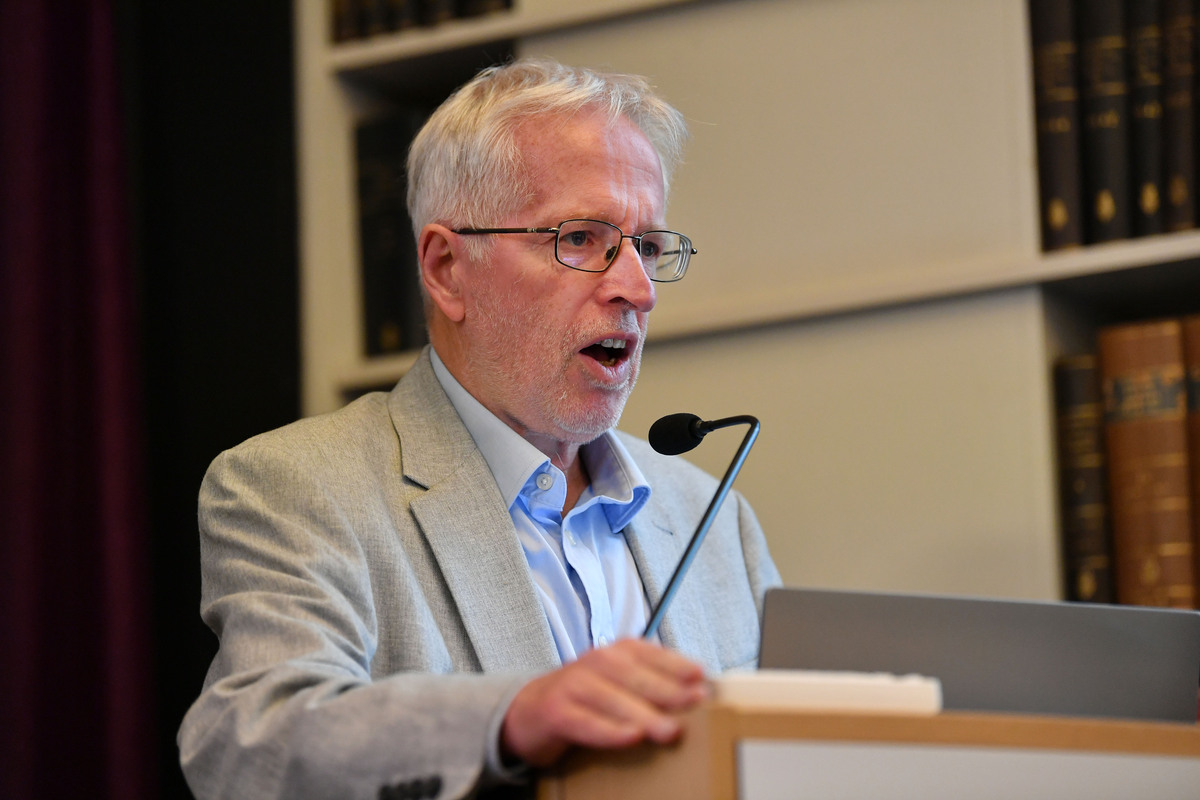
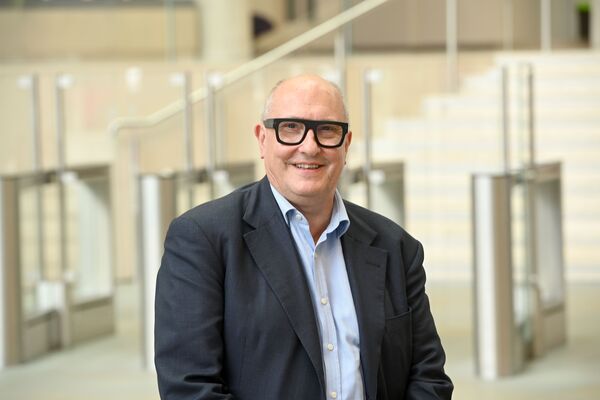
Martin Ince at the ABSW Awards ceremony in 2024 – Mark Lewis Photography
But, to be an award-winning science writer, you also need, as we all know, to be… a nerd. And not just a nerd but an enchanting nerd because you need to communicate so well that you induce nerdiness in others.
And here Martin has excelled.
According to one of his contemporaries, his mind is “a huge filing cabinet full of knowledge”. And in that cabinet, there’s a whole drawer on astronomy. This man has witnessed six solar eclipses around the world, including in Russia, China and Australia – and I believe a 7th is on the cards in August. He has written a whole dictionary of astronomy; and has been BBC Radio Suffolk’s resident astronomy expert (as he puts it), amongst other things.
He’s also a geology nerd and, for example, wrote 'The Rough Guide to the Earth'.And then – randomly? – he was expert enough in social science to be able to publish a book of conversations with one of the world’s leading social scientists – Manuel Castells, which has been translated into Complex Chinese, Turkish, Hungarian, and Portuguese.
I’m not planning to go through the whole of Martin’s CV. But I do need also to mention something that dominated his life from 2004 until recently: he co-founded the QS World University Rankings, and spent years coordinating and editing them and then advising on them and travelling the world lecturing on them.
There’s more, but I will leave you to ask him about chapters like being treasurer of Tooting Labour Party, or his work as a futurologist.
I’d like to finish by saying that Martin is too self-deprecating to realise how much he is respected and valued. People tell me they particularly prize his modesty, integrity and loyalty to his friends.
So: for contributions to thoughtful science journalism and science popularisation, to our profession and our Association, please congratulate Martin for winning the Lifetime Achievement Award.
Aisling Irwin is an award-winning science journalist and an ABSW Board member.