Barnes: “I have never seen health and science journalism as separate to investigative journalism”
Hannah Barnes won the Feature (General Audience) award and was later named the winner of the Outstanding Contribution award at the 2026 MJA Awards.

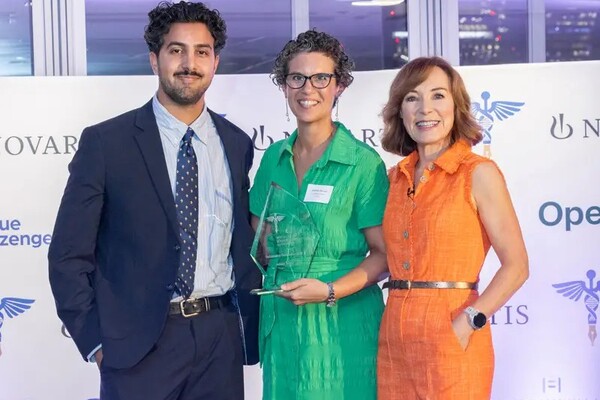
(From the right-hand side) Sian Williams, journalist and presenter, Hannah Barnes, the winner of the Outstanding Contribution prize, and Jaber Mohamed, Novartis UK Corporate Communications Director, at the Medical Journalists' Association (MJA) Awards ceremony. (Photo credit: MJA)
Hannah Barnes spent four months investigating failings in maternity care at Oxford University Hospitals alongside Channel 4 News colleagues Robbie Boyd and Victoria Macdonald.
“Britain’s next maternity scandal” was published by The New Statesman in November 2025. In September 2026, Barnes won the Outstanding Contribution to Health and Medical Journalism award at the 2026 Medical Journalists’ Association (MJA) Awards.
ABSW: Your story was published almost a year ago. Did you expect it to have such an impact?
Hannah Barnes: Whenever you publish an investigation, it’s impossible to predict what the impact will be. This story was no different. We always thought it should make an impact, but we didn’t know what to expect.
When the then Health Secretary Wes Streeting branded our findings “scandalous” and ordered NHS England to immediately investigate what had been uncovered, we were delighted. It was no less than what these families deserved. Meanwhile, the story was plastered across national newspapers, radio, and television and was even raised in Prime Minister’s Questions.
Subsequently, many of the investigation’s findings were upheld by the national Amos Review. There has also been a change in clinical policy on scanning at the trust, which will hopefully make care safer for women and their babies.
With this investigation, I think joining forces with Channel 4 News gave us a winning combination. Channel 4 News has the reach of millions and the emotional power that television can bring to these heartbreaking, almost unbelievable, stories. In print, I had the space to go into the details, to lay out some of the huge pile of evidence we consulted. I think the collaboration helps to explain the impact we made.
What makes your piece of work a winner?
That’s a difficult one to answer! The competition was extremely fierce.
Perhaps because it was such an in-depth piece of reporting and placed women’s voices front and centre. It showed how the impact of poor maternity care could be lifelong. Along with Robbie Boyd and Victoria Macdonald at Channel 4 News, who worked on this investigation with me, we spoke to more than two dozen families over several months. Between them, they told stories of poor care spanning more than a decade and a half.
I think the judges also recognised how much time and work went into the piece. It required navigating some complex medical processes and guidelines, legal threats to some of the women involved, as well as being prepared to investigate one of the UK’s most prestigious hospitals with a global brand.
It also required patience and compassion. It should not be underestimated how challenging it can be to obtain the trust of so many women. Some had never shared the details of their births – and their impact – with anyone before, let alone with a stranger. I do not underestimate how awful it must be to relive the worst moments of your life with a journalist, and it is a responsibility I take extremely seriously.
Can you give a piece of advice on how health, science and investigative journalists can work together?
I have never seen health and science journalism as separate to investigative journalism. In fact, good investigative journalism needs subjects that are important to people, that are often complex, and have a power imbalance at the heart of them. So much of health reporting ticks all those boxes, with maternity being a clear example. One benefit of health stories as investigations is that there is often a decent paper trail – we have medical notes, appointment letters, clear complaints processes, and investigatory routes, for example. Use everything at your disposal to tell the strongest, incontrovertible story possible.
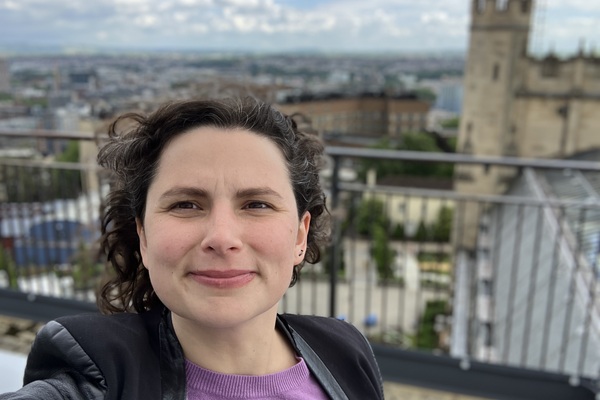
Hannah Barnes is a freelance journalist and an ABSW member, and she was the investigations editor at The New Statesman when the story was published. Before that, Barnes spent 15 years at the BBC specialising in analytical and investigative journalism on both television and radio. Her book, Time to Think: The Inside Story of the Collapse of the Tavistock’s Gender Service for Children, was published by Swift Press in 2023.