Young Science Writer Award 2026
The 2026 award raised the bar: from whale language to algorithmic bias, young writers questioned the evidence and made complex science unmissable.
The Young Science Writer Award 2026 marked the fifth year of the competition, and a turning point in the standard of writing it attracts. Entries arrived from all four nations of the UK and from around fifty towns and cities, and the quality across the field was the most consistently high the award has seen.
Pupils took on some of the most pressing questions of our time: how new technologies shape the way we see the world, what medicine can and cannot yet promise, and how we protect the natural world we depend on. The strongest essays went further than explaining the science. They weighed the evidence, acknowledged its limits, and drew on the voices of researchers and of people living with the issues they wrote about, producing work that would sit comfortably alongside professional science journalism.
That made the judging exceptionally difficult. Our panel of 22 judges, drawn from across UK science journalism, broadcasting and research, read every entry in full over several rounds, and we are grateful for the care and rigour they brought to every decision.
This page celebrates the 2026 finalists. Each essay featured here was chosen for the strength of its argument, the clarity of its explanation and its confidence in writing for a general reader. We congratulate every finalist and thank every pupil who entered. Whether you were entering for the first time or returning to the award, your work and your perspective are valued, and we hope to read more from you in future competitions.
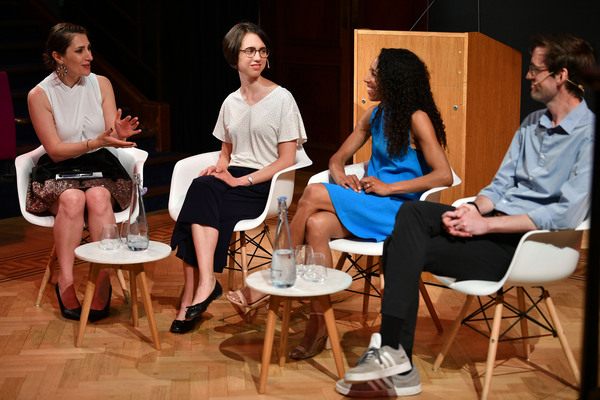
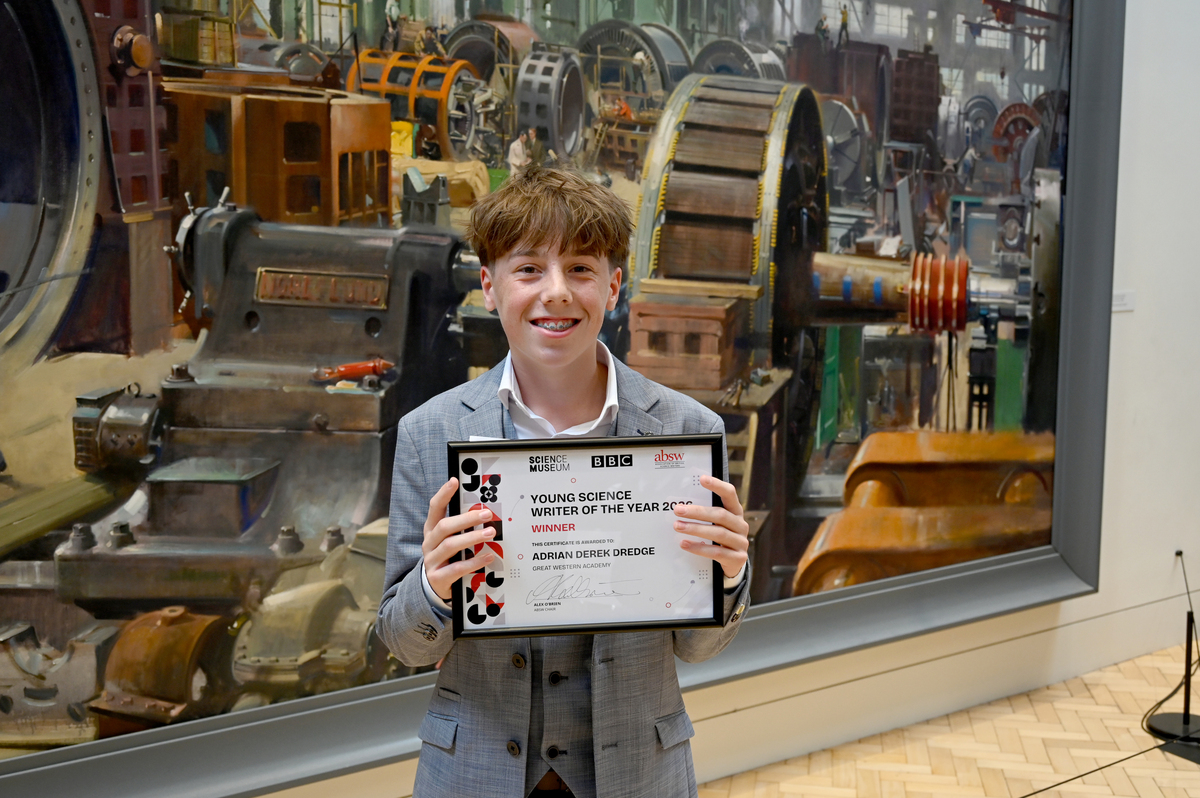
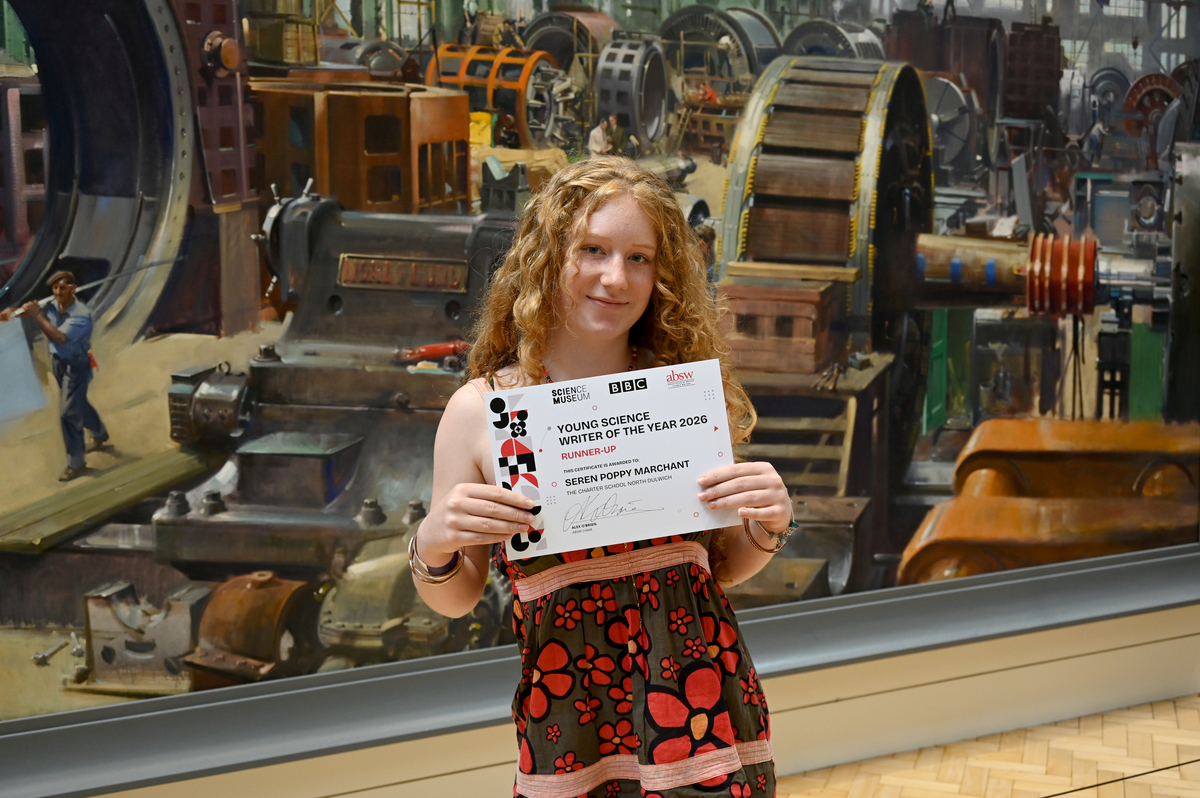
The 2026 finalists and winners were celebrated in September at the Smith Centre, Science Museum, London, at our annual awards ceremony. The award is made possible by our strategic partners, the BBC and the Science Museum, with support from STAEDTLER, DK, Raspberry Pi and The Royal Institution, and by the generous support of Alex and Jeff O'Brien, without whom the award would not be possible.
Imagine being locked in a windowless room and asked to map a changing city using only maps that are fifty years old. Anyone following your map would walk into walls that came down decades ago. This essay argues that artificial intelligence works in the same way, learning from records of what
people did rather than what was true. If the past was unfair, what kind of
future are we teaching our machines to build?
For decades, scientists listened to sperm whale clicks and heard no pattern at all. Then someone wondered whether the largest animal on Earth might simply be speaking on a slower clock. Sped up, the clicks revealed more than a hundred combinations, some behaving like the vowels in human speech. This essay explores what that discovery means, and leaves us
with an unexpected question: are we ready to listen, rather than talk?
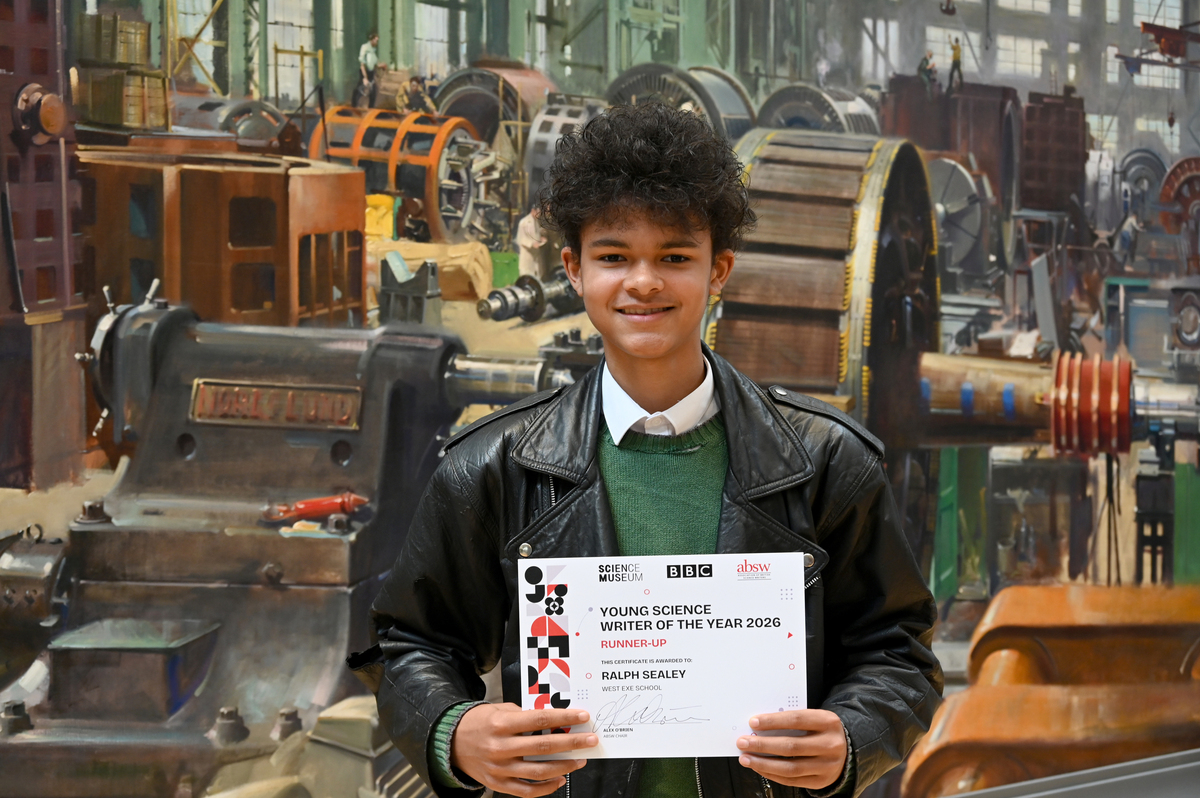
Black men face a far higher risk of prostate cancer, so why doesn't the way we screen for it reflect that? Rooted in a personal family connection and informed by interviews with doctors and researchers, this essay examines the limits of the standard PSA test and the promise of newer markers. Its proposals reach beyond the clinic, into barbershops and places of worship,
built on one clear conviction: unequal risk should never mean unequal care.
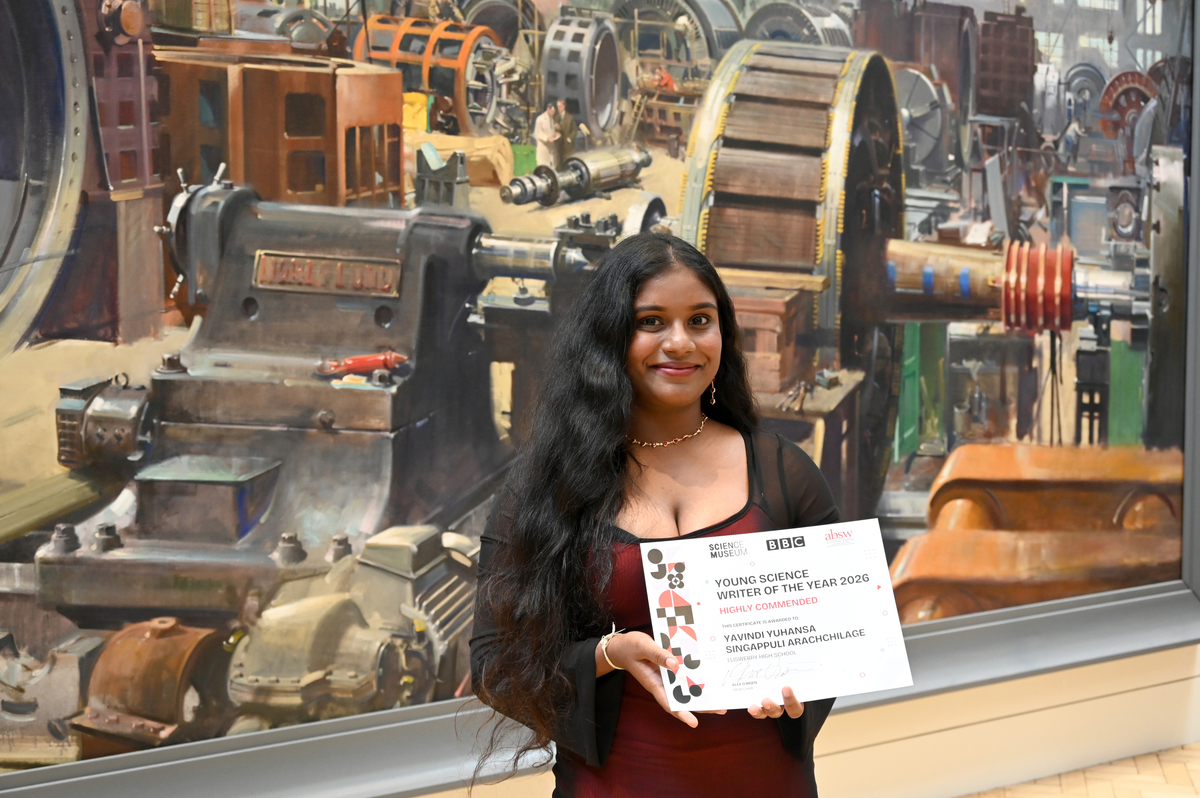
That knot in your stomach before an exam may be more than a figure of speech. This essay follows the conversation between the brain and the trillions of bacteria living in the gut, where much of the body's serotonin is made. Drawing on research showing that gut microbes can change behaviour, it asks a question that is both scientific and philosophical:
if our moods are shaped by microbes, how much of us is really "us"?
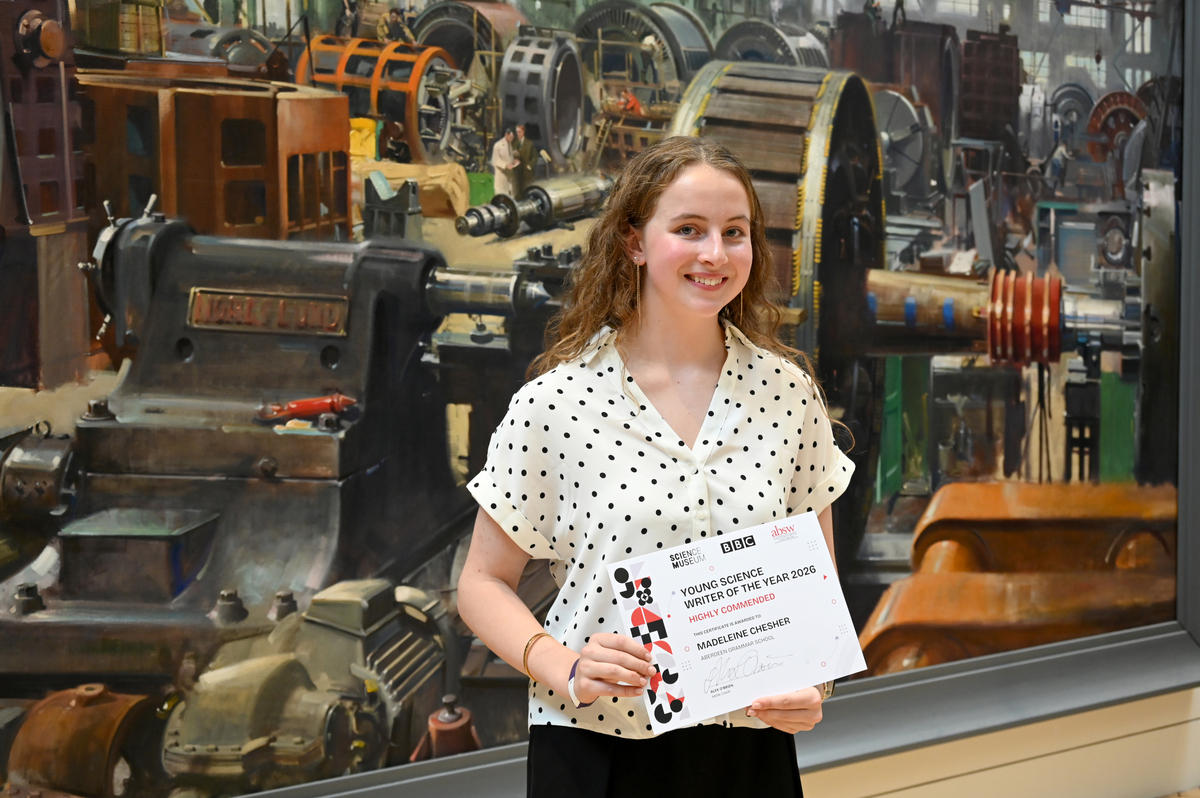
Every time a bilingual speaker reaches for a word, their brain is silencing its rival in another language. Inspired by a decade of learning French, this essay explores how that constant effort builds new connections, and why it may even help delay dementia. Then it turns to a worrying trend: fewer pupils than ever are learning languages at school. What are we losing when
we stop saying bonjour?
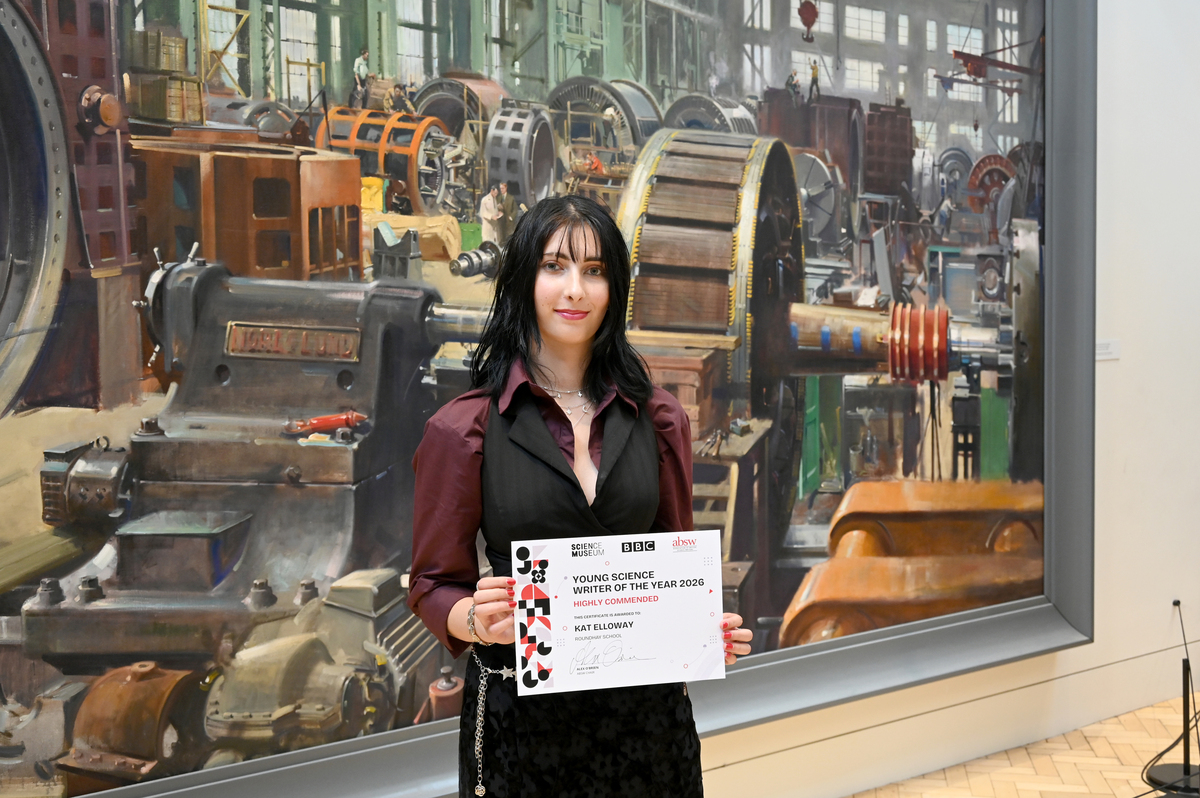
Somewhere there is an animal less than a millimetre long that can dry itself out, shut down almost completely and simply wait for better days. This essay explores why water seems so essential to life, and the extraordinary creatures that push its limits. Then it asks the question hardly anyone thinks to ask: if we only ever look for life where there is water, what might we be missing?
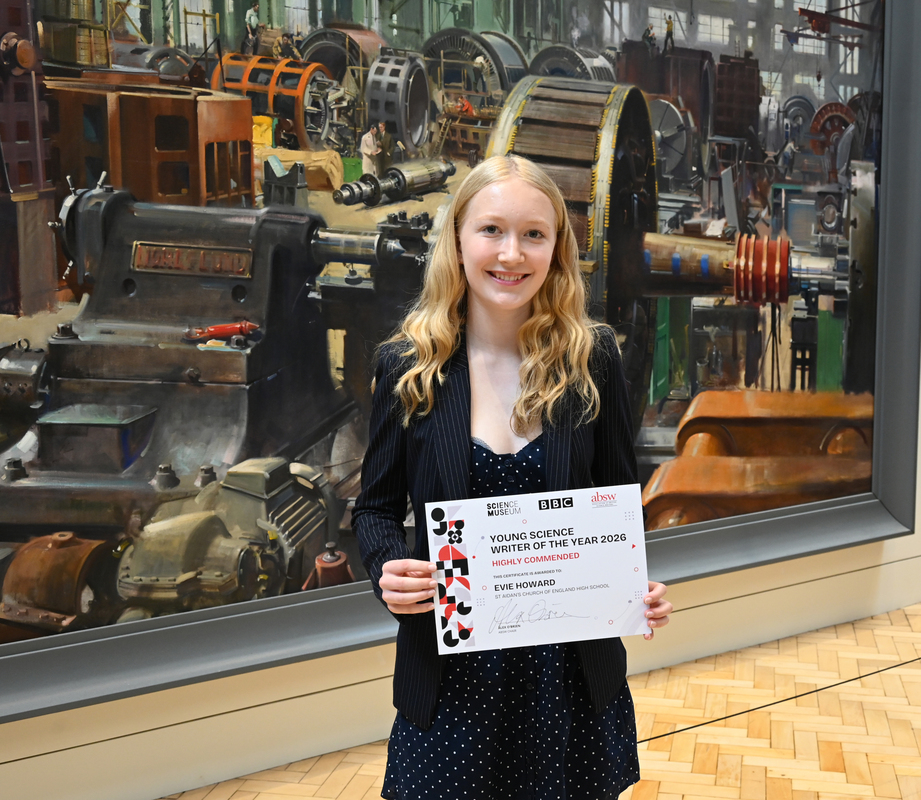
Scientists can now grow insulin-making cells in the laboratory, so why isn't Type One Diabetes already cured? This essay reveals the catch: the immune system that destroyed the original cells attacks the new ones too. Exploring the race to protect them, and drawing on an interview with someone living with the condition, it asks what a cure would truly mean to the people waiting for one.
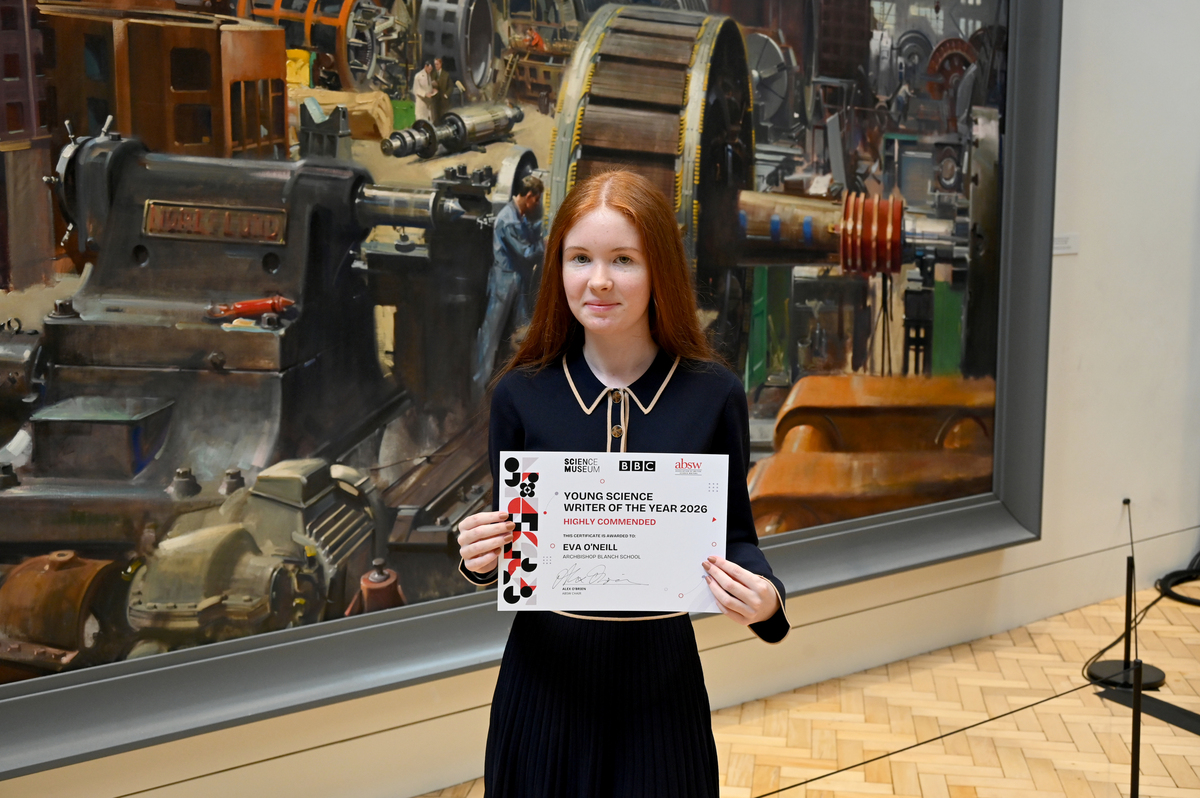
Parkinson's is a disease of the brain, so why are some scientists looking at the gut? This essay follows a remarkable idea: that in some people the disease may begin in the digestive system and travel upwards along a single nerve. Weighing the evidence, from a large Danish study to the insights of a
consultant neurologist, it asks whether the key to treating Parkinson's might lie
somewhere no one expected.
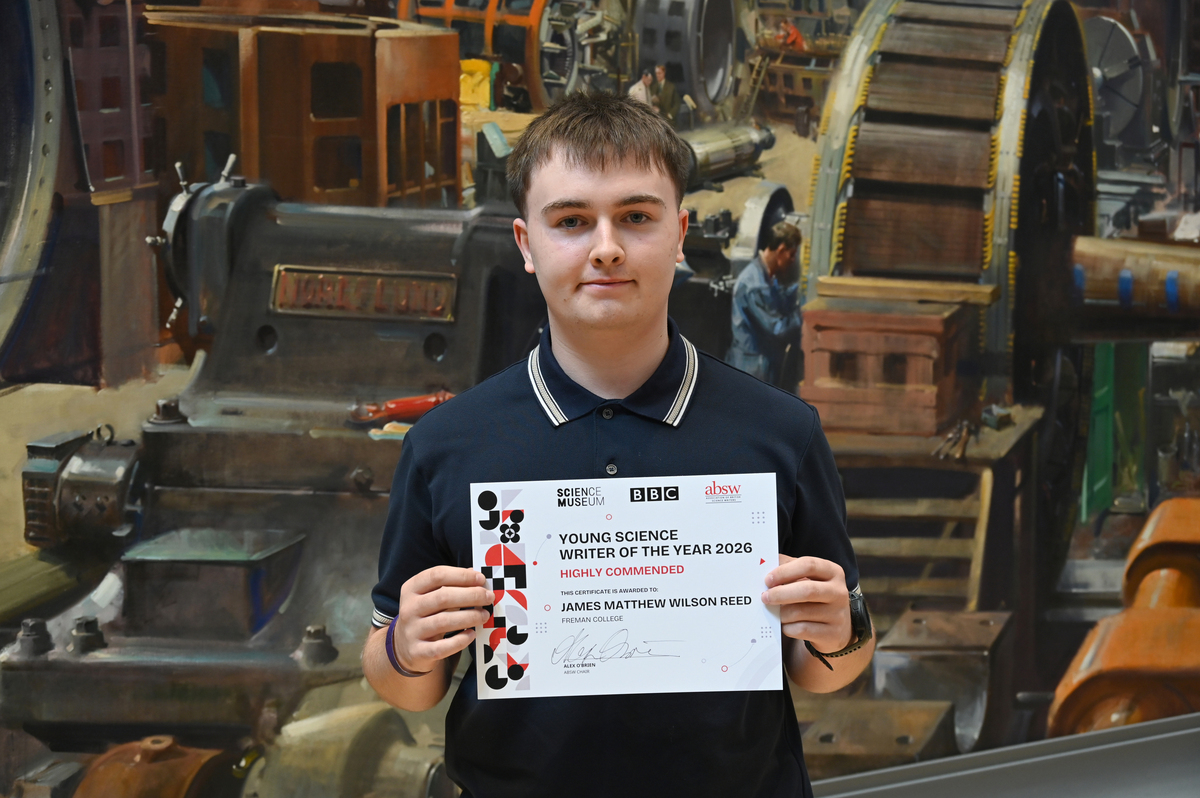
What happens when antibiotics stop working? This essay turns to an unlikely ally: viruses that hunt bacteria and nothing else, which have already saved patients when every antibiotic had failed. But it resists the easy happy ending, confronting the challenges of storage, regulation and resistance. Could the answer to superbugs be a team effort between old
medicines and some of the oldest predators on Earth?
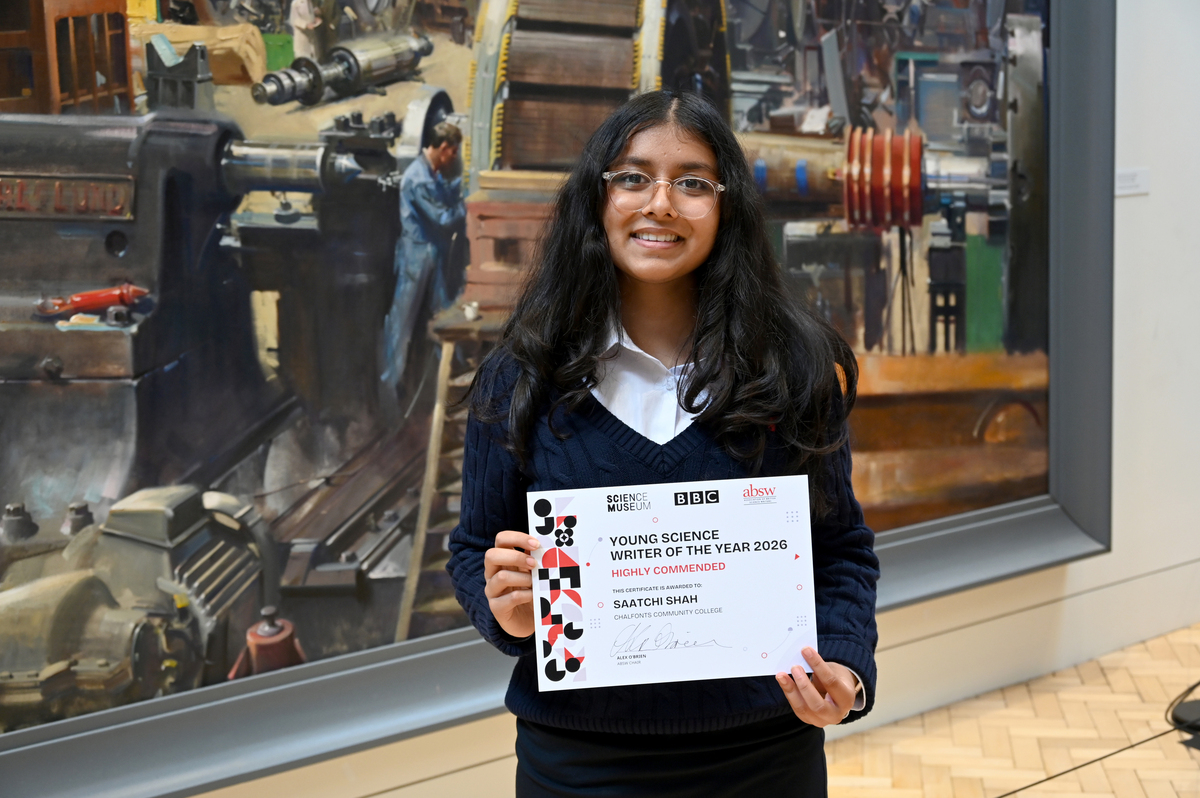
Obesity is often blamed on a lack of willpower, but what if the body's own signals are the problem? This essay explains how the message that says "I've had enough" can stop getting through, and how new medicines imitate it. Looking past the headlines at the trials, side effects and what happens when treatment stops, it asks whether these drugs are a cure or only part of the answer.
"No added sugar" sounds reassuring on a baby food pouch, but it may not mean what you think. This essay reads between the lines of food labels to show how sugar slips into our diets, and how it acts on the same reward pathways in the brain as some drugs. With practical proposals from clearer labels to a wider sugar tax, it asks: can we make healthy choices if the
packaging works against us?
Inside a spider, silk is a liquid. It hardens into thread as it leaves the body and, weight for weight, is stronger than steel. With both accuracy and humour, this essay explains how this remarkable material forms and what it could be used for, from heavy lifting to wound dressings and scaffolds that help damaged nerves grow back.
The "dark side" of the Moon is not dark at all, only hidden from view. And that hiding place may be exactly what astronomers need. This essay makes the case for a radio telescope on the far side, shielded from Earth's noise by thousands of kilometres of rock, listening for faint signals from before the first stars formed. Could the quietest place we can reach help us hear the beginning of everything?