The class of 2026: Meet this year’s ABSW Media Fellows
Find out more about this year's Fellows and their media placements.
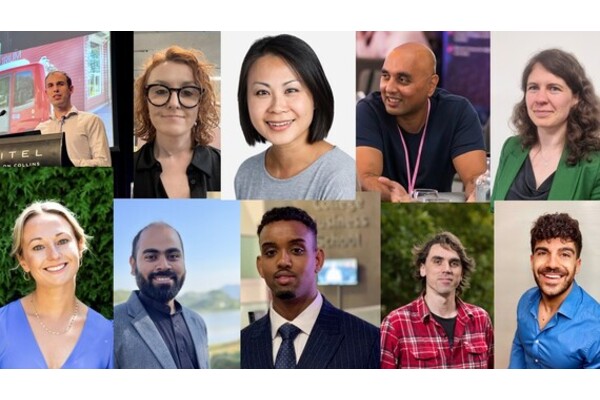
NB: This article is continually updated as placements are confirmed and then undertaken.
Previously run by the British Science Association, ABSW media fellowships provide a unique opportunity for practising scientists, clinicians, and engineers to spend two to six weeks working at the heart of a media outlet such as the Guardian, BBC Radio Science Unit or IFLScience.
Aimed at giving scientists the confidence to engage with the media, and to bridge the gap between journalists and scientists, the scheme also tackles mistrust and misrepresentation, and builds understanding between science and society.
Any UK institution from Universities to professional bodies can offer an ABSW media fellowship to its academics. In 2026 University of Nottingham, Kavli Institute for Nanoscience Discovery University of Oxford, and University of Bristol have joined the scheme. Returning to the scheme are University of Bath, UCL Global Engagement, University of Hertfordshire, University of Cambridge, and UCL Engineering.
In total ten academics will take part in the scheme this year. The Fellows have taken part in a 'Journalism 101' course and most have now been matched to a media host. Placements will take place over the summer months with some extending into October. Placements can be anything from 2 weeks in length, full or part time, in person, entirely remote or hybrid to match the working patterns of the media outlet. Once all placements are completed the Fellows will join a development day to discuss lessons learned and how they might take forward this learning within their institutions.
In the past media fellows have continued to produce content for the media, used their learning with students and colleagues to improve media relations between academia and journalists, and some have even developed specific posts within their institution to promote productive media relations.
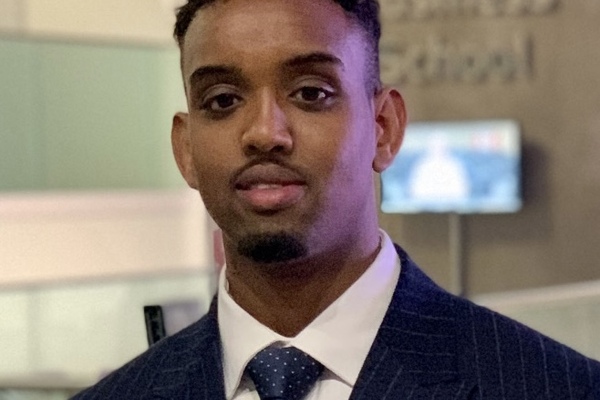
Dr Hanad Ahmed is a surgeon-scientist, with clinical practice as Specialist Registrar in Cardiothoracic Surgery at Royal Papworth Hospital, and NIHR academic at the University of Cambridge. He's published in leading journals including The Lancet. His current research focuses on personalised surgery and risk prediction in cardiac surgery, aiming to improve patient outcomes through data-driven approaches. He has also trained at Imperial College Business School and is Clinical Lead at Emerald, a digital health startup working at the intersection of prevention, surgery and emerging health technologies.
As both a clinician and researcher, I see first hand how complex medical advances can be difficult to communicate beyond specialist audiences. This fellowship offers an opportunity to bridge the gap between rapidly advancing research and public understanding. I’m particularly interested in improving how innovations in surgery, personalised health, and tech-enabled care are communicated, so they can better inform patients, clinicians, and policy.
Hanad has been placed with The Guardian Science Desk and his fellowship is supported by University of Cambridge.
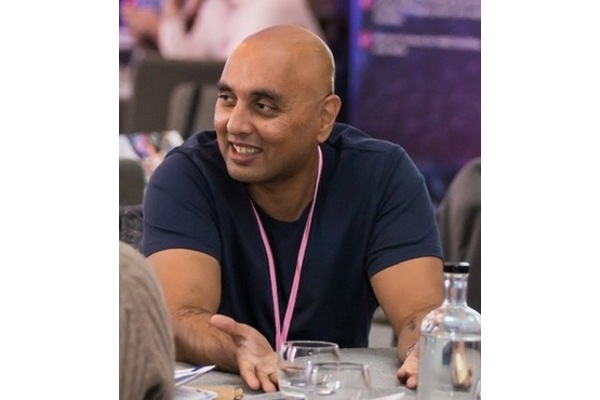
My research examines rare high-stakes phenomena such as organisational disasters and radical innovation, focusing on the underlying dynamics that are often difficult to observe but crucial to understand. I am interested in how better theorising can improve our grasp of these complexities, particularly in relation to AI adoption in strategic management and public policy. Because these issues affect high-risk systems and public life, I approach them through a pragmatist lens and with an eye to making them accessible beyond academia.
Academics tend to be trained in knowledge production but not in knowledge dissemination. In this gap, misinformation steps in. I hope to understand the latter better to reduce the gap.
Due to a change in academic role and a move out of the UK sadly Akhil has had to withdraw from the Fellowships he had been placed with Chemistry and Industry and was supported by University of Bath.
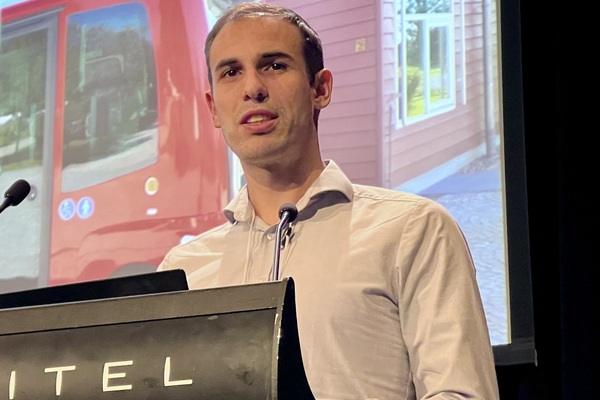
Dr Mark Colley is a Lecturer at the UCL Interaction Centre (UCLIC) within the Department of Computer Science. His research focuses on Human-Computer Interaction, accessibility, and the design of future mobility. Mark explores how emerging technologies—such as automated vehicles, urban air mobility, and robotic systems—can be designed to safely communicate with and serve diverse road users. He is particularly focused on ensuring these systems are accessible to people with visual impairments and deaf or hard-of-hearing pedestrians. Through his work, Mark aims to guarantee that the transport networks of the future are built inclusively from the ground up, meeting the needs of all members of society.
As an ABSW Media Fellow, I hope to learn how to translate complex engineering research into compelling stories that resonate with the wider public. With automated vehicles and urban air mobility moving rapidly from concept to reality, questions of accessibility and inclusion are more important than ever. I am excited to work alongside journalists to demystify these technologies and ensure that the needs of diverse road users become a central part of the public conversation about our transport futures.
Mark has been placed with the BBC Radio Science Unit and his fellowship is supported by UCL Engineering.
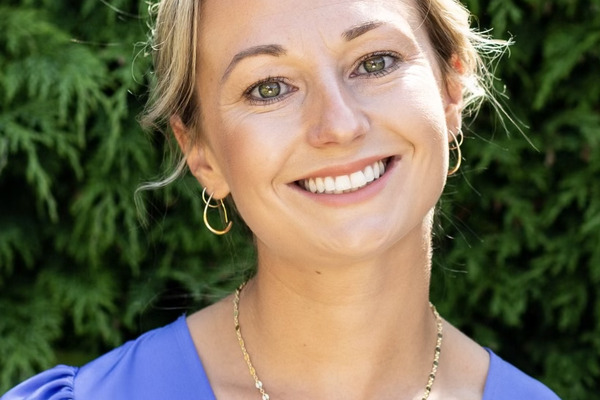
Dr Sophie Farrow is a Parkinson’s UK Senior Research Fellow in the Department of Physiology, Anatomy & Genetics at the University of Oxford and Academic Coordinator for the Alzheimer’s Research UK Thames Valley Network. Her research integrates experimental and bioinformatic approaches to understand how genetic information can be used to advance personalised treatments for people with Parkinson’s disease. She is also passionate about patient and public involvement and engagement and has led several initiatives to strengthen collaboration between researchers and the communities they serve.
I’m really excited to have been selected as an ABSW Media Fellow. I hope the Fellowship will help me develop the skills and insight to communicate basic laboratory science clearly and responsibly beyond academia. I look forward to taking what I learn back to my workplace to help bridge the gap between researchers, patients, the media and the wider public.
Sophie carried out her placement at New Scientist and her fellowship is supported by Kavli Institute for Nanoscience Discovery, University of Oxford.
Read Sophie's work published in New Scientist:
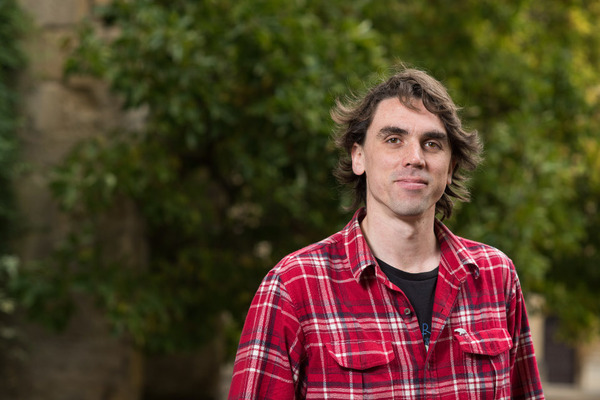
Felix Flicker is a theoretical physicist and senior lecturer in physics at the University of Bristol. His research focuses on the quantum underpinnings of matter, in particular problems which involve interesting shapes and patterns (geometry and topology). He is the author of The Magick of Matter.
I would like to understand the production of popular science content from the commissioning side, in order to help me develop my own future projects.
Felix spent his placement at the BBC Radio Science Unit in Cardiff, and his fellowship is supported by EPSRC and the University of Bristol.
Whilst at the BBC, Felix worked on Inside Science, a weekly BBC 4 Radio programme that 'illuminates the mysteries and challenges the controversies behind the science that's changing our world.' He also hopes to continue working with the Unit after his placement.
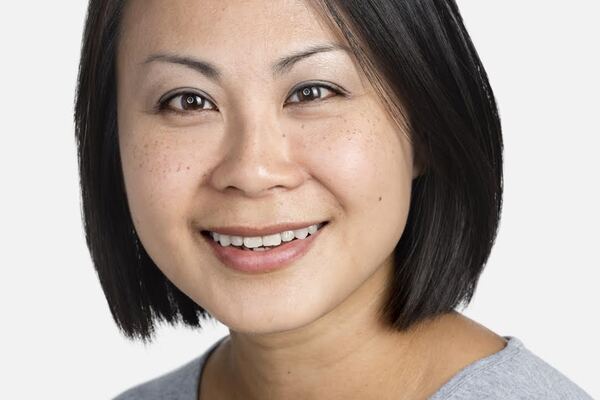
Shan Goh is a microbiologist (Associate Professor in Research) at the University of Hertfordshire. Her research looks to understand and then control the spread of drug-resistant bacteria in humans and animals. Shan enjoys collaborating with people from different sectors and disciplines who share her enthusiasm for utilising viruses that can kill bacteria, which are known as phages. Shan investigates how phages influence bacterial survival and disease, with the aim of eliminating drug-resistant bacteria and improving global health.
Through this fellowship, I hope to communicate scientific discoveries in a way that cuts through the noise, so that the essence is clear for all audiences.
Shan has been placed with Nature Africa and her fellowship is supported by University of Hertfordshire.
Read Shan's first piece for Nature: Persistence, humility and HIV: life lessons from immunology
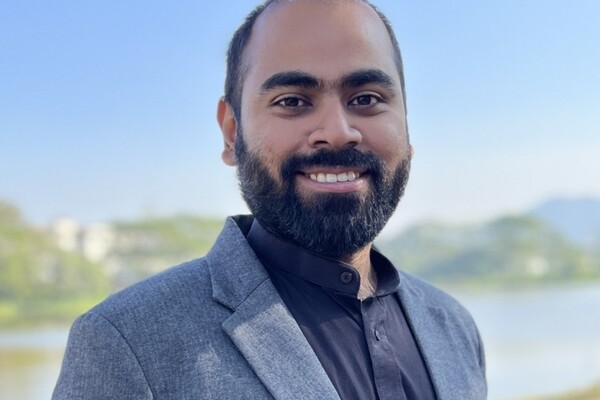
Preetish Kakoty is a Marie Skłodowska-Curie Postdoctoral Fellow at University College London, where his research focuses on compound disaster risk, understanding and modelling what happens when multiple unrelated hazards such as earthquakes and floods interact in space and time, and what that means for the safety of our infrastructure and the recovery of our communities. Originally from Assam in northeast India, he trained as a structural and earthquake engineer in India, United States and Canada before completing a postdoctoral fellowship in New Zealand. His research sits at the intersection of engineering, natural hazards, and policy, with a focus on translating model risk estimates into decisions that matter for risk mitigation and reduction. He has written on broader themes of disaster risk for The Conversation and runs a Substack newsletter on disaster risk in an evolving world.
The complexity of disaster risk — and the challenge of communicating it — creates a power and knowledge asymmetry between communities exposed to hazards and those accountable for reducing them. This Fellowship is an opportunity to close that gap: to learn how journalism works from the inside, and to understand how effective narratives translate data into insights that drive action.
Preetish has been placed with Physics World and his fellowship is supported by UCL Engineering.
Read Preetish's work for Physics World:
https://physicsworld.com/author/preetish-kakoty/
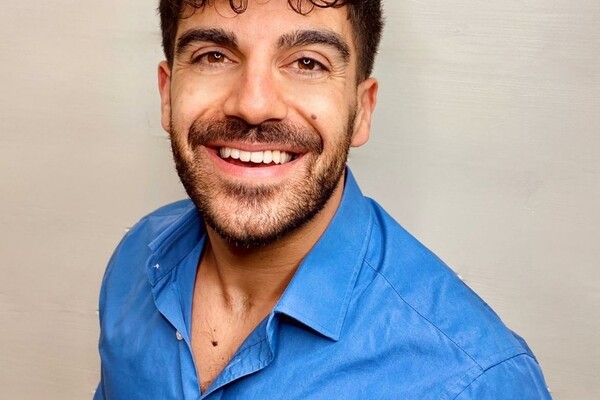
Alex Keshavarzi is a Senior Research Fellow in the High Energy Physics Group at University College London and holds a Royal Society University Research Fellowship as of October 2023. Alex’s research spans both experimental and theoretical particle physics, focusing on ultra-high precision measurements and calculations of the behaviour of fundamental particles. His work aims to address profound questions about the observable universe, including the existence of dark matter and the universe’s matter-antimatter asymmetry, which are crucial for the existence of life as we know it. Alex is actively involved in several key experiments at Fermilab, USA, including the Muon g-2 Experiment, the Mu2e Experiment, and the DUNE Experiment. His work on the Muon g-2 Experiment earned him recognition as a laureate of the prestigious Breakthrough Prize in Fundamental Physics in early 2026.
I’ve spent much of my career communicating major scientific results to global audiences, but what fascinates me about the Fellowship is the opportunity to understand what happens on the other side of that process — how journalists identify the human story within complex science, build trust with audiences, and communicate clearly at pace without losing accuracy. Particle physics tackles some of humanity’s biggest questions, and I want to learn how to share that sense of wonder in ways that are engaging, responsible, and meaningful beyond academia. As I take on more visible roles within major international collaborations, I hope the Fellowship will help me become not just a better communicator, but a better collaborator with the media, and bring those lessons back to my students, colleagues, and research community.
Alex has been placed with Live Science and his fellowship is supported by UCL Global Engagement.
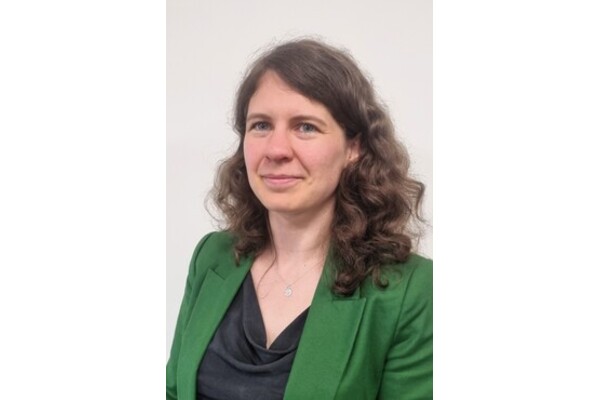
Dr Miriam O'Duill is an Associate Professor of Chemistry at the University of Nottingham, where she lectures in organic chemistry, volunteers at science outreach events, and runs a research group in the GSK Carbon Neutral Laboratory for Sustainable Chemistry.
The number one stumbling block slowing innovation in biomedical research is synthetic organic chemistry, i.e. methods to make new molecules that can treat and diagnose disease. Miriam's research focuses on the development of new reactions to address this challenge. She is particularly interested in finding sustainable alternatives to the use of precious metals in the synthesis of pharmaceuticals and medical imaging probes.
In the current climate of fake news and anti-expert sentiment, I hope that the Media Fellowship will provide me with the tools to combat misinformation, re-build trust in science, and communicate my own research to a wider audience.
Miriam has been placed with the BBC Radio Science Unit her fellowship is supported by University of Nottingham.
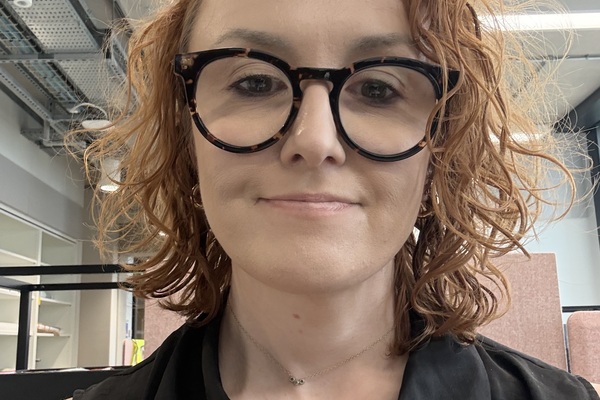
Dr Natalie Wint is an Associate Professor of Engineering for Social Change at University College London, based in the Department of Science, Technology, Engineering and Public Policy (STEaPP). With a background in physics and materials engineering, her research now focuses on engineering education, with particular interest in engineering culture and how engineers are prepared for the social and ethical challenges of the future workplace. Her recent publications have focused on emotional labour in teaching, student mental health and resilience, industrial sponsorship, marketisation of HE, and the experiences of teaching-focused academics. She is also interested in measures of research impact and research culture.
Natalie is committed to widening participation and improving representation in engineering. Her work in this area has focused on how engineers and engineering are perceived within society, and she is actively involved in international initiatives on diversity, equity, and inclusion.
Alongside her academic work, Natalie is an editor and podcast host, with a strong interest in making research more accessible and engaging for wider audiences. She is particularly passionate about teaching students how to communicate across disciplines, and her work emphasises the importance of dialogue between engineering, policy, and society.
I have always been interested in the way that society perceives the role of engineers and scientists and how to best bridge gaps in understanding to ensure that our work is meaningful and has impact. More recently, working at the interface of science, engineering and policy has made me appreciate the need to be confident in engaging with those who influence decision making. I am therefore excited to learn about the most suitable formats, modes, and styles of communication for different contexts and audiences and understand how we can work to tackle growing issues around trust in the scientific community.
Natalie has been placed with The Guardian Environment Desk and her fellowship is supported by UCL Engineering.
Read Natalie's work published by The Guardian:
Are you an academic institution or professional body that would like your academics to take part in the ABSW media fellowships scheme in 2027? Then download our brochure below and get in touch with the ABSW Executive Secretary Sallie Robins to discuss.
Could your media outlet host an ABSW Media Fellow? Download our brochure below to find out more and get in touch with ABSW Executive Secretary Sallie Robins to discuss.