Institute visit - University of Manchester
This trip aims to inspire you, show you what research is out there, and give you a chance to talk to researchers in person. No obligation to report.


University of Manchester in Autumn. (Credits: Merve Selcuk Simsek/Unsplash)
When was the last time you learned about cutting-edge science in a university lab and saw a research study in person? Much of science journalism happens on a screen, through papers and Zoom calls, but on 13 November we’re heading to the University of Manchester to meet researchers face to face and learn about several exciting projects in person.
We will visit labs across different departments and meet researchers working on new diagnostic tools for Parkinson’s disease, plastics recycling, developing materials for quantum technologies and biotechnology for global health drugs. There is no obligation to report on any of the projects we visit – this trip is purely to inspire you, show what research is out there, and give you a chance to talk to researchers in person.
Lunch will be provided, during which we will be joined by researchers from the university. (Note: all ABSW event meals are vegan/vegetarian but let us know if you have any other dietary requirements by answering the question in the registration form.)
This event is open to science journalists of all career stages across the UK and Ireland, but we ask that you arrange your own travel to and from Manchester.
This is an all-day event, starting at 10:00. After the university visit ends at 16:00, we will make our way to the Pen & Pencil for drinks and nibbles – a social event co-organised with SciCommUnity GM.
Bookings close on 6 November 2026.
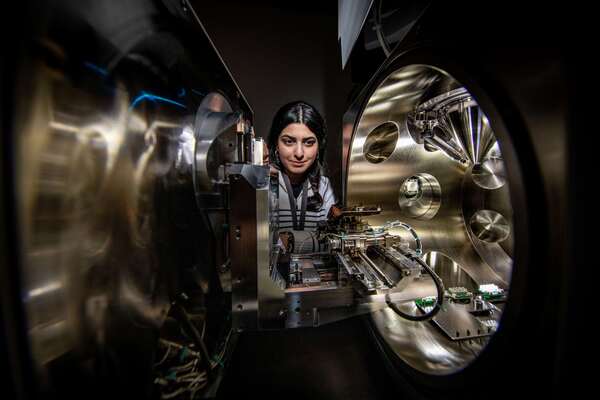
Manchester is home to a new £12.6 million UK research programme that will use atomic-scale materials engineering to unlock new capabilities in communications, sensing and computing.
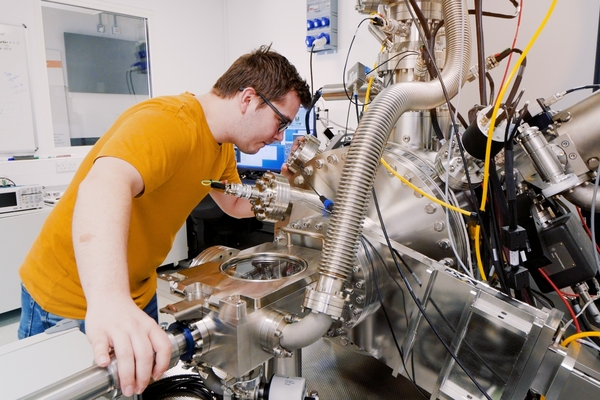
The Platform for Nanoscale Advanced Materials Engineering (P-NAME) is a suite of three internationally unique instruments that can implant individual atoms into a material with precision exceeding 20 nanometres.
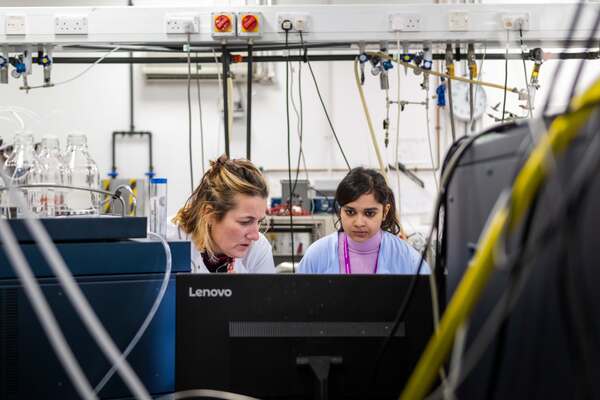
Professor Perdita Barran leads research into detecting Parkinson’s disease from skin swabs in a mass spectrometry laboratory.
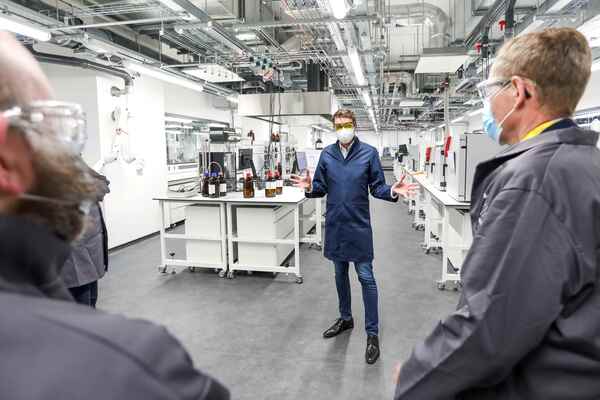
Professor Mike Shaver welcomes visitors to the Sustainable Materials Innovation Hub, a research facility focused on sustainable plastics and multi-materials.
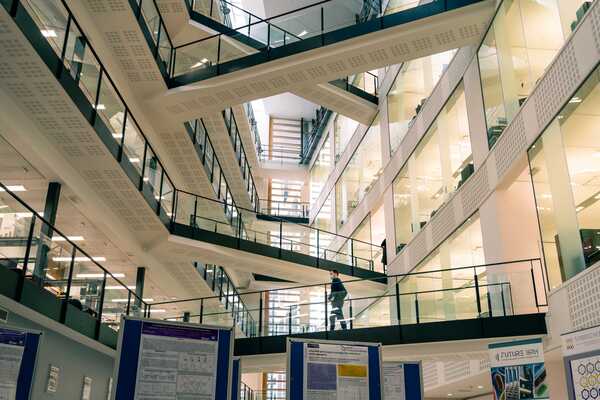
The Manchester Institute of Biotechnology is a research institute focused on using biology to develop medicines and more sustainable manufacturing processes.


